Planning a Gutter Replacement: What Homeowners Should Consider
Gutters are one of those parts of a house that rarely get attention until something goes wrong. A clogged downspout during a heavy storm, a visible sag in the run, or water stains on the siding can all signal it is time to take a closer look. For many homeowners, the decision to replace old gutters comes after years of patching leaks or cleaning out debris that never seems to stop. Understanding what is involved in a full replacement, and the choices that come with it, makes the process much smoother.
Signs That Replacement Is Worth Considering
Not every problem means the entire system needs to come down. A single leak at a joint can often be sealed, and a bent section can sometimes be straightened. But there are a few clear indicators that a full replacement is the better route. Cracks that run along the length of the gutter, sections that have pulled away from the fascia board, or rust spots that have eaten through the metal are hard to repair in a lasting way. When multiple sections show this kind of wear, piecemeal fixes just delay the inevitable.
Another sign is standing water in the gutter after a rain. Gutters are designed to slope slightly toward the downspouts so water flows and drains. If water pools, the slope may have shifted, or the gutter may have settled over time. That kind of problem often traces back to the hangers or the fascia board itself, and repairing it usually means removing the gutter anyway.
Material Options and What They Mean for Longevity
The choice of gutter material affects not only how the system looks but also how often it will need attention. Aluminum gutters are common for their light weight and resistance to rust, though they can dent more easily than some other options. Steel gutters, usually galvanized, are stronger but will eventually rust if the protective coating gets scratched or wears thin. Copper gutters develop a patina over time and can last for decades, but they come with a higher upfront cost and require compatible fasteners to avoid corrosion.
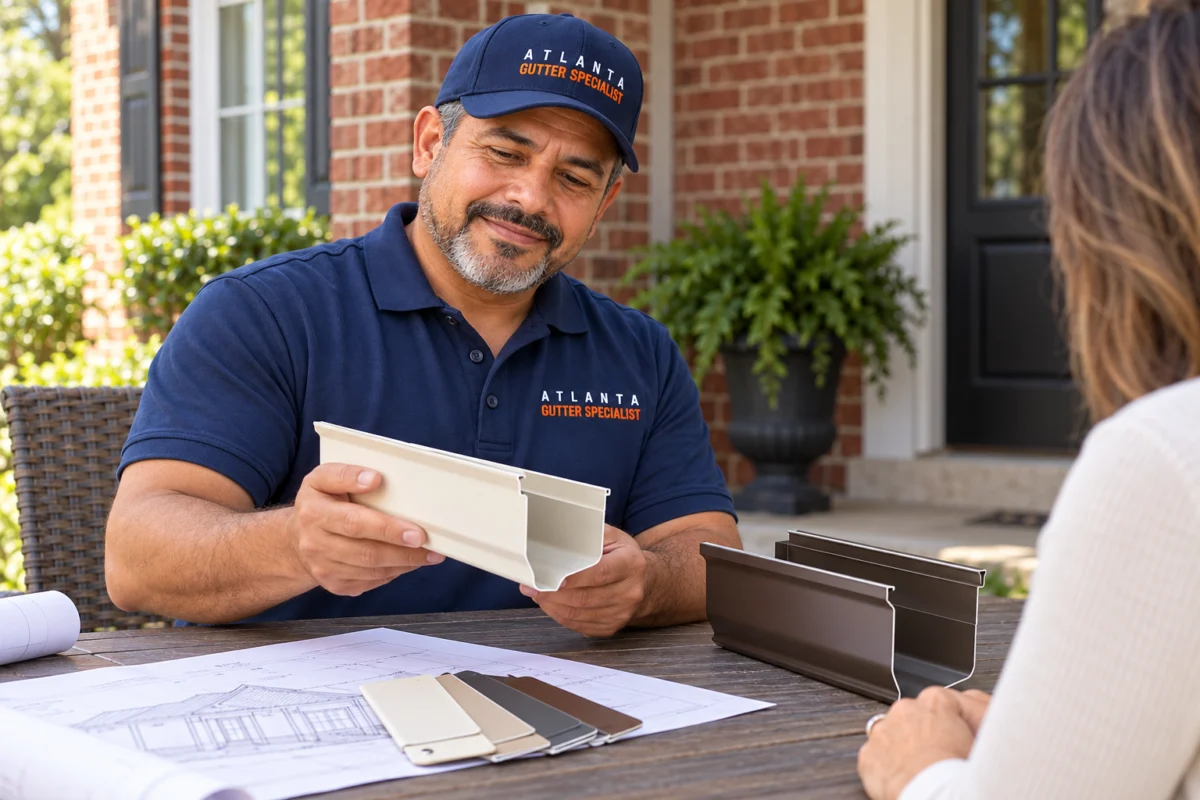
Vinyl gutters are another option, especially on homes where budget is a primary concern. They do not rust, and they are simple to cut and install. However, vinyl becomes brittle in very cold weather and can crack under the weight of ice or snow. For homes in Atlanta, where freezing temperatures are less common, vinyl can work well as long as it is installed with proper support.
Seamless Gutters and the Advantage of Fewer Joints
Traditional sectional gutters come in pieces that are joined together on site. Those joints are common leak points, especially after years of expansion and contraction. Seamless gutters are formed from a continuous length of material, usually aluminum or steel, that is custom-cut to the house. Because there are no joints except at the corners and downspout outlets, the risk of a leak developing over time is much lower. Seamless systems also tend to look cleaner, since there are no visible seams every ten feet. The trade-off is that installation requires specialized equipment, and the gutter must be measured precisely before it is formed.
Getting the Size and Slope Right
Gutter size is not a one-size-fits-all decision. A standard five-inch K-style gutter works for many homes, but a roof with a large surface area or a steep pitch may need a six-inch gutter to handle the volume of water during a heavy storm. Undersized gutters overflow easily, which can lead to water pooling around the foundation or eroding the soil next to the house. Oversized gutters, while less common, can look out of proportion on a smaller home.
Slope, sometimes called pitch, is equally important. Gutters should slope about a quarter-inch for every ten feet toward the downspout. Too little slope, and water sits. Too much slope, and the gutter may look crooked or pull away from the fascia over time. Checking the slope during installation ensures the system works as intended from the start.
Downspout Routing and Placement
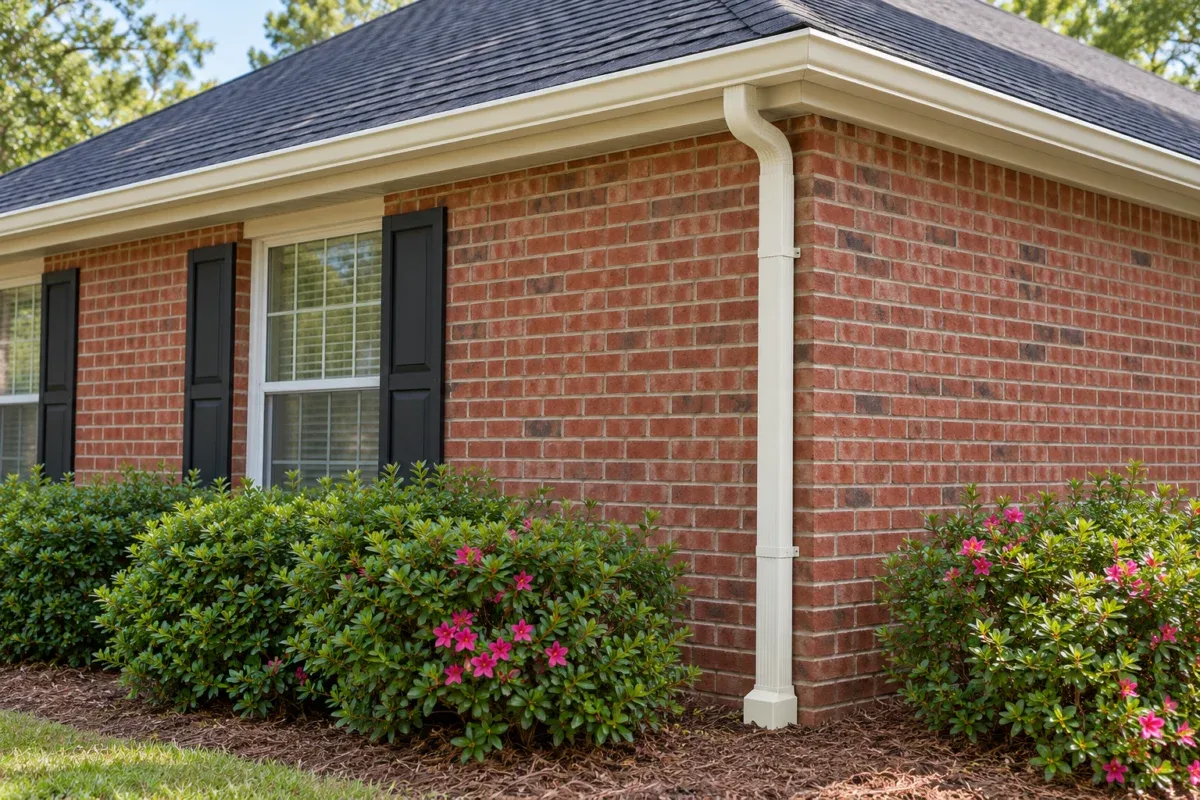
Downspout placement is more than a cosmetic detail. The location of downspouts determines where water leaves the gutter and how it is directed away from the house. Ideally, downspouts are positioned near corners or at low points in the roofline. Each downspout should have an extension that carries water at least a few feet from the foundation. In many older homes, downspouts empty too close to the house, which can cause basement seepage or crawlspace moisture over time.
When you replace old gutters, it is worth looking at whether the downspouts are in the best spots. Adding a downspout can solve a problem area where water tends to spill over, while moving one can simplify the routing of the underground drainage pipe. Downspout routing also matters for aesthetics: a downspout that runs across a porch or along a visible wall can be rerouted to a less noticeable location during a full replacement.
Leaf Guards and Keeping Gutters Clear
Debris is the most common cause of gutter problems. Leaves, twigs, and seeds build up in the trough and block the flow of water to the downspout. Over time, the weight of trapped debris can pull gutters loose or cause them to sag. Leaf guards, sometimes called gutter covers or screens, sit over the top of the gutter and allow water in while keeping solid debris out. They are not a perfect solution: small particles can still get through, and some types of guards need occasional cleaning themselves. But for homes with overhanging trees, they can significantly reduce how often the gutters need to be cleaned.
There are different styles of leaf guards, from foam inserts that sit inside the gutter to mesh screens that clip over the top. The right choice depends on the type of debris in your area and the gutter profile. A guard that works well with pine needles may not be as effective with large oak leaves. Asking an installer what they see working best in your neighborhood can help narrow the options.
When to Replace vs. Repair
There is no hard rule that says gutters must be replaced after a certain number of years. Some systems last twenty years with proper maintenance; others start showing problems after ten. The condition of the fascia board behind the gutter matters too. If the wood has rotted or become soft, simply hanging new gutters on the same fascia will lead to the same problems. In that case, the fascia should be repaired or replaced before the new gutters go up.
When you begin to replace old gutters, the project often reveals other issues that were hidden behind the old system. Rotting soffits, damaged flashing around the roofline, or missing drip edges are all things that can be addressed at the same time. Tackling those repairs together saves money on labor and prevents the new gutters from being attached to a compromised structure.
Planning the Work and Choosing an Installer
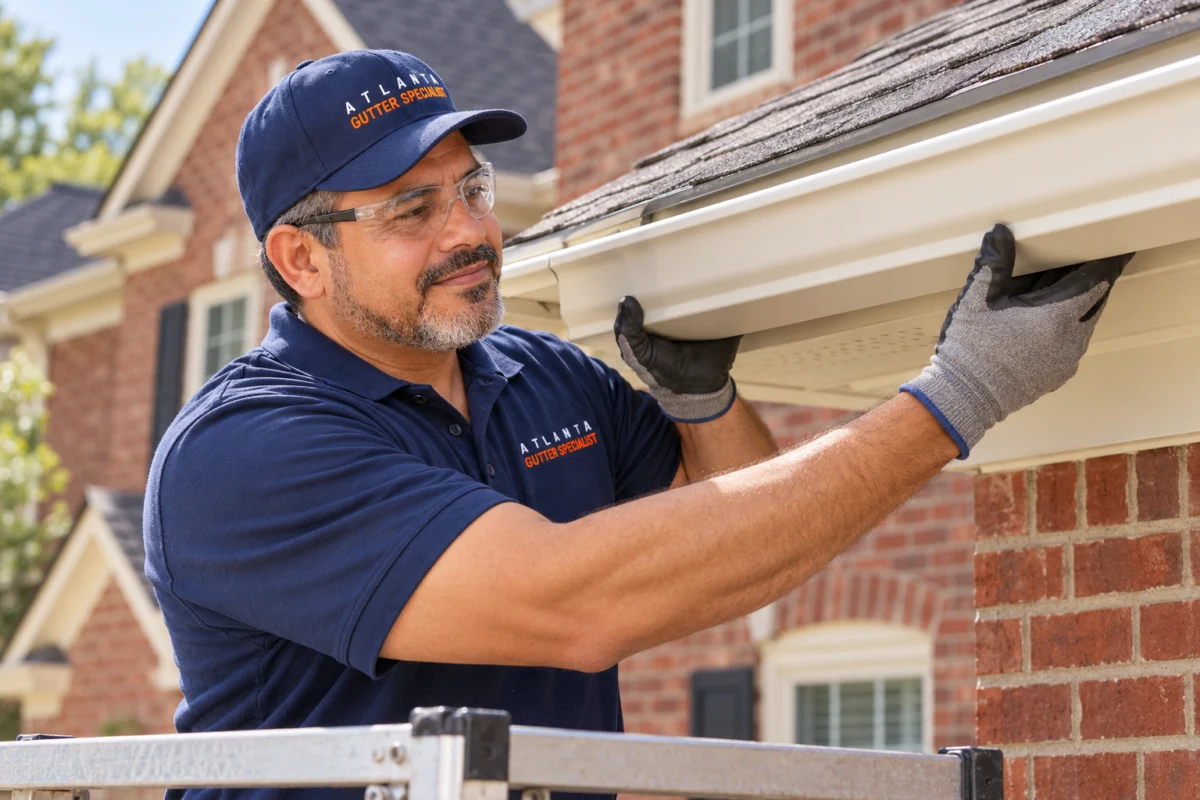
Gutter replacement is not a weekend project for most homeowners. The work involves working at height, handling long sections of material, and making precise cuts and connections. A professional installer brings the right safety equipment, experience with slope and fastening, and access to seamless gutter machines if that is the chosen system. When interviewing contractors, it helps to ask about the specific materials they recommend and why. A good installer will explain the trade-offs between cost, durability, and appearance without pushing a single option.
It is also worth asking how they handle downspout routing and whether they include downspout extensions in their standard quote. Some installers treat extensions as an extra, but they are essential for keeping water away from the foundation. Getting a clear scope of work in writing prevents surprises later.
Making the Most of the Replacement
A gutter replacement is an opportunity to improve how the whole water management system around the house works. While the old gutters are off, it is a good time to check the condition of the roof edge, the fascia, and the soffits. Upgrading to a larger gutter size, adding a downspout in a problem area, or installing leaf guards are all easier to do during a full replacement than as a separate project later.
When you finally decide to replace old gutters, taking the time to plan the material, size, and downspout layout pays off in fewer clogs, less maintenance, and better protection for the house. The goal is a system that handles rain reliably for years, not one that needs attention every season.